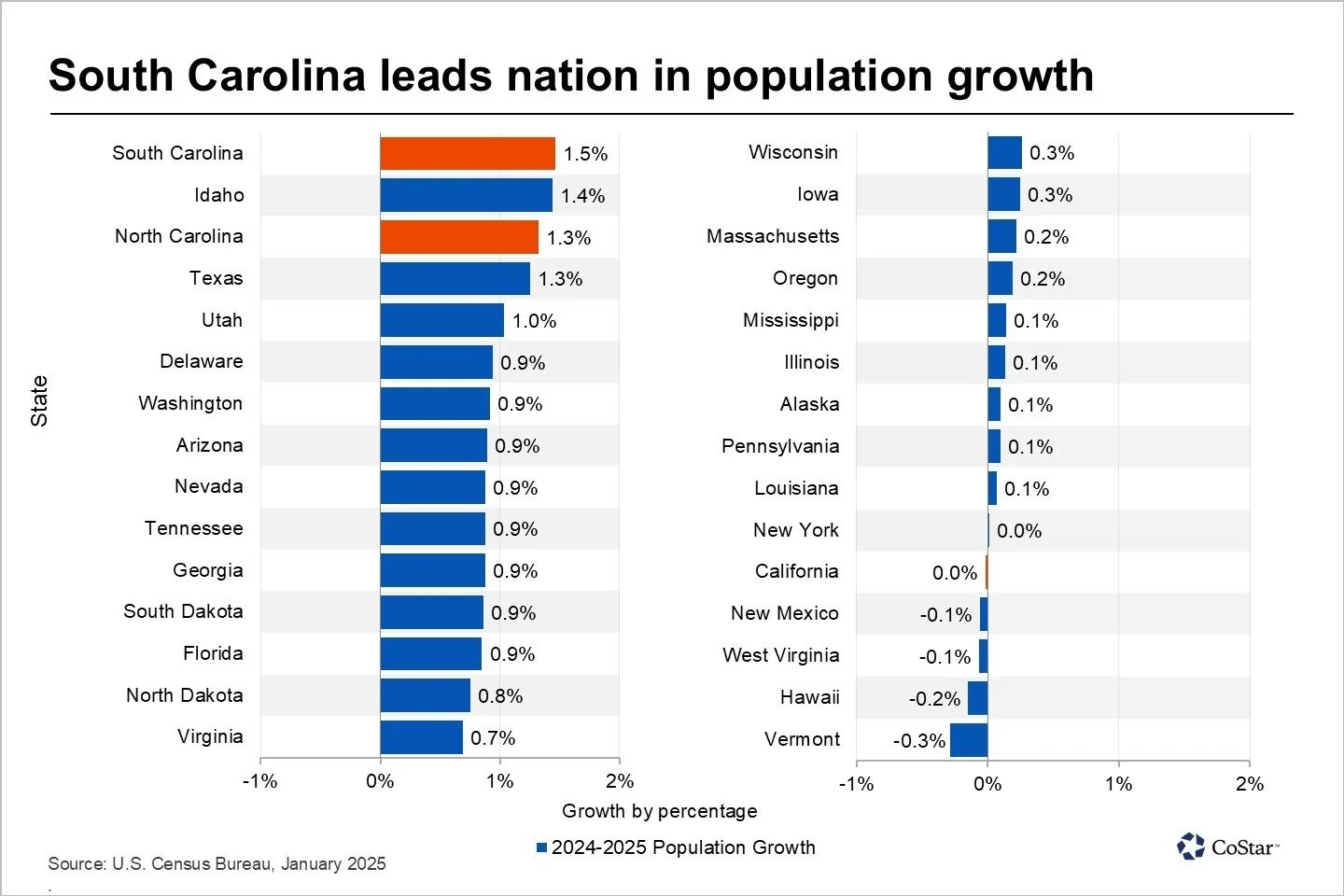
We’ve all felt it. National headlines scream “slowdown,” yet every time I check the latest U.S. Census Bureau data, the Carolinas keep climbing the charts. South Carolina just posted the fastest state-level growth in the country; 1.5% between July 2024 and July 2025. North Carolina sits right behind at 1.3%. That’s three times the national rate of just 0.5%, which itself dropped from 1% the year before as international immigration cooled off.
For us who watch where money and people actually move, this isn’t noise. It’s a signal. And it’s been building in plain sight.
I’ve spent years tracking these migration patterns because they drive the real returns we chase; whether it’s rental yields, home-value appreciation, or the local companies that suddenly become acquisition targets. The Carolinas aren’t growing because of flashy incentives or one-off booms. They’re growing because everyday Americans are voting with their U-Haul trucks, moving here for jobs, affordability, and that coastal lifestyle we all dream about on a gray Monday.
Domestic Migration Is the Real Engine, and It’s Still Accelerating
Here’s the part that stands out: this growth held up even as the national picture weakened. Both states saw only a modest 20-basis-point slowdown from 2024. Why? Because domestic movers flooded in. North Carolina led the entire country in net domestic migration, welcoming more than 84,000 new residents from other states. South Carolina ranked third with over 66,000.
We’re not talking about temporary snowbirds. These are families, professionals, and retirees relocating permanently; exactly the kind of stable demand that supports long-term real estate and local economies.
Big Counties: Where Jobs Meet Affordability
Look closer, and the pattern becomes crystal clear. Growth is concentrated in larger, job-rich counties and the suburbs around them.
Wake County (Raleigh area): High-paying biomanufacturing jobs from companies like Genentech and Fujifilm have created a virtuous cycle. Educated talent attracts employers; employers attract more talent. Median home price sits around $460,000—still well below many Northeast and Midwest markets.
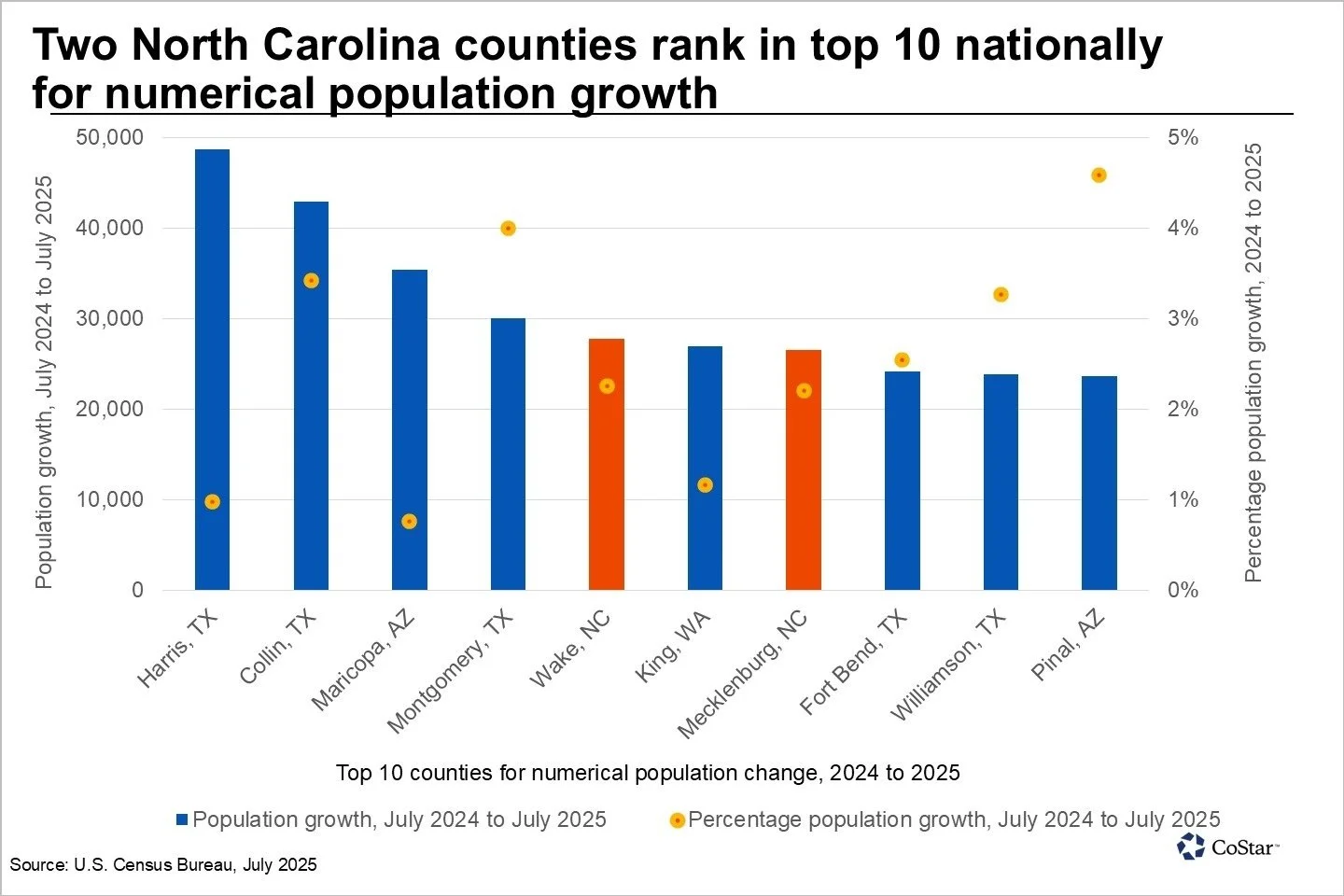
Mecklenburg County (Charlotte): Home to Bank of America and Truist headquarters, plus major Wells Fargo operations. The metro added jobs at a blistering 2.7% pace in 2025—the fastest among all U.S. markets over 1 million people (U.S. Bureau of Labor Statistics). Mecklenburg alone gained 26,554 residents, ranking 7th nationally among counties.
The suburban ripple effect is even stronger. Johnston and Harnett counties outside Raleigh grew 2.8% and 2.5% respectively, with median home prices of $375,000 and $324,500. In the Charlotte area, Iredell County expanded 2.8% while offering homes at a $399,900 median, noticeably more accessible than Mecklenburg’s $440,000.
This is the sweet spot we investors look for: strong job growth paired with relative affordability that keeps the inflow coming.
Coastal Counties: The Lifestyle Magnet Growing at Breakneck Speed
Then there’s the coast, where smaller counties are posting eye-popping percentage gains.
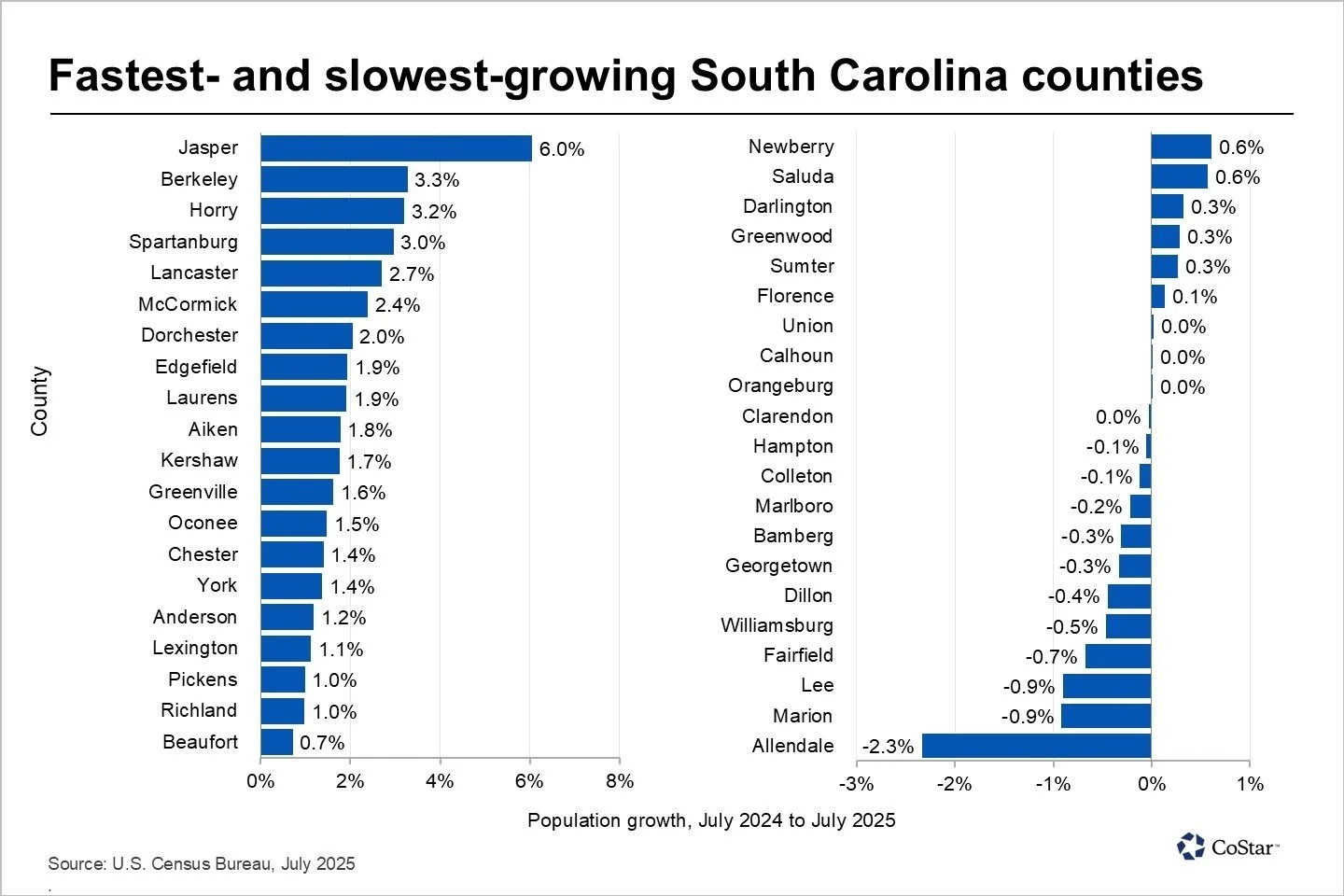
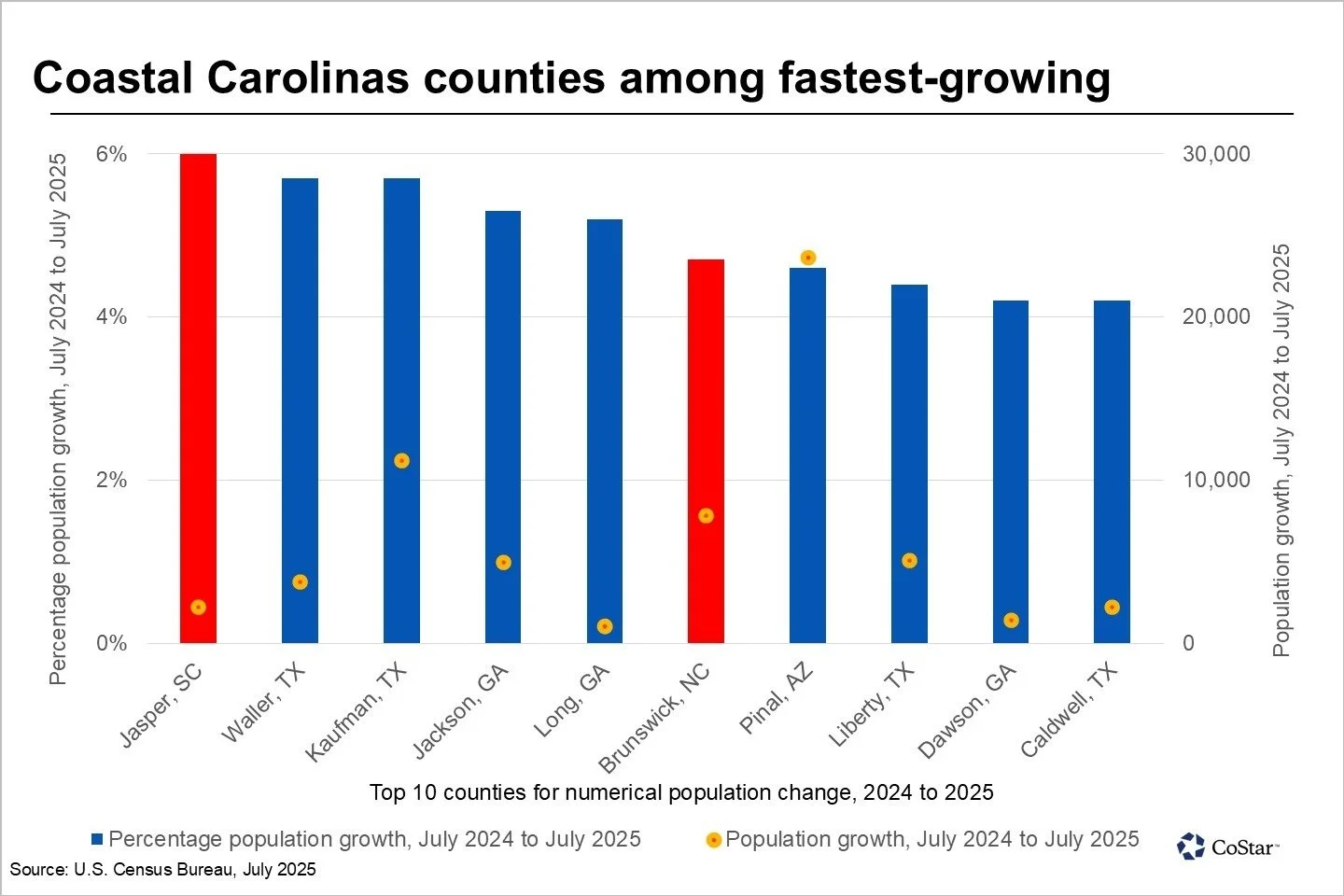
South Carolina’s Jasper County led the entire nation (for counties over 20,000 people) with 6% growth. Median home price? Just $391,990, far more reasonable than neighboring Hilton Head’s $528,000. Retirement and second-home demand, plus spillover from Savannah’s port and industrial growth, are turning this into a construction hotspot.
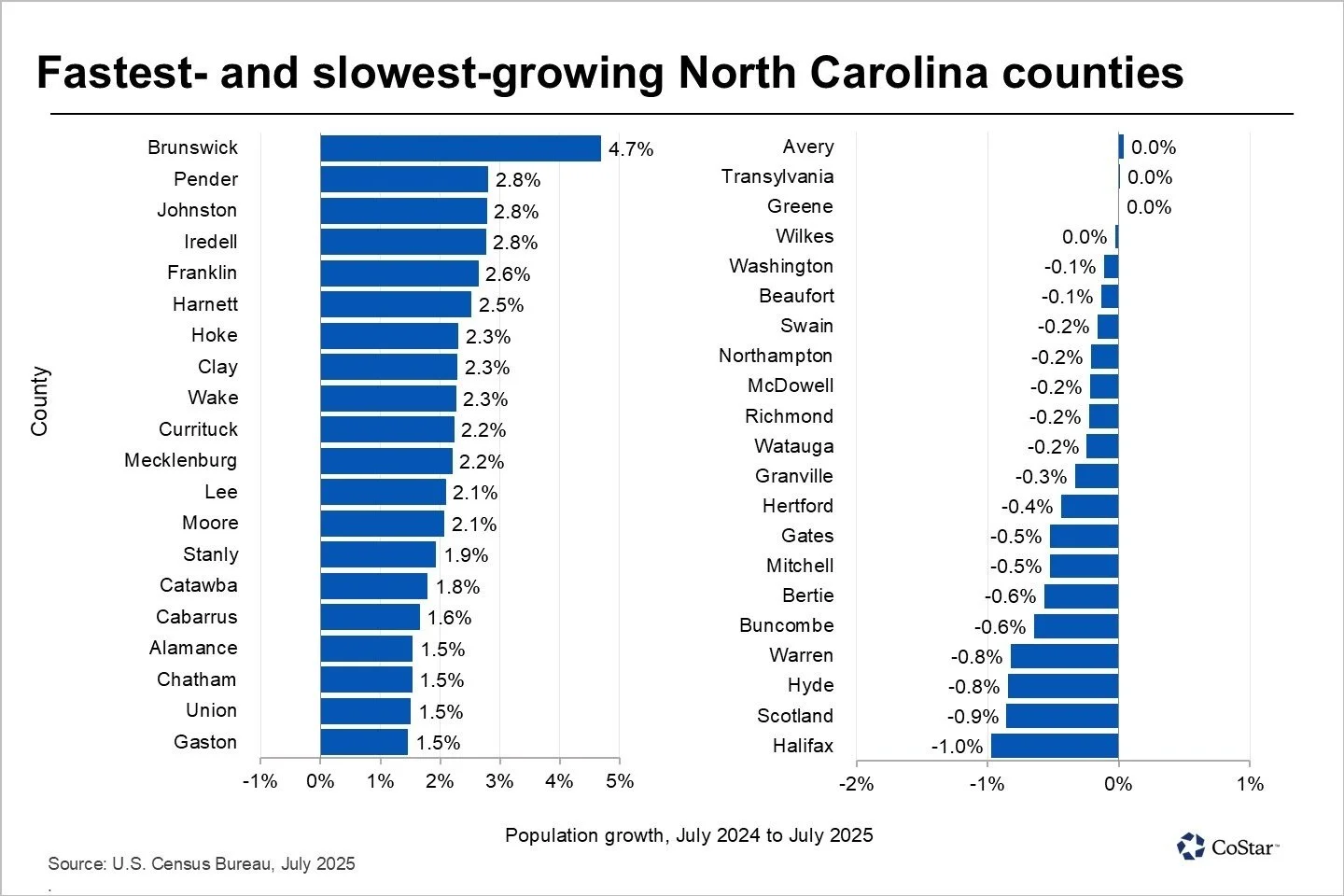
The top three fastest-growing counties in South Carolina were all coastal: Jasper, Berkeley, and Horry. In North Carolina, Brunswick County (population 174,702) added 7,813 residents for a 4.7% jump. Beachfront access, proximity to Wilmington and Myrtle Beach, and median prices around $391,395 (versus $451,500 in central Wilmington) make it an obvious draw.
We’ve seen this movie before. When lifestyle meets affordability, the population wave creates decades-long tailwinds for real estate values and local service businesses.
What This Means for Us Right Now
As experienced investors, we don’t chase headlines—we follow capital and people. The Carolinas are delivering both. Higher population density in key corridors supports:
Stronger rental demand and home-price appreciation
Expanded local economies that reward infrastructure, healthcare, and professional services play
A more resilient tax base that keeps attracting corporate relocations
And because the growth is driven by domestic migration rather than volatile international flows, it feels more durable heading into 2026 and beyond.
Ready to Align Your Portfolio with Where America Is Actually Moving?
If these trends resonate with how you think about long-term wealth, I’d be happy to have a private conversation about how they might fit into your strategy. 👉 Schedule a private conversation here: https://www.johnnylynum.com/alignment
Disclaimer: This article is for informational and educational purposes only. It is not intended as financial, investment, tax, or legal advice. All data referenced comes from the U.S. Census Bureau, U.S. Bureau of Labor Statistics, Costar, and Homes.com as of the July 2024–July 2025 period. Past performance or trends do not guarantee future results. Individual circumstances vary; please consult your own qualified financial advisor, accountant, or attorney before making any investment decisions.